“I’ve know Paul for years and definitely trust him in the health advisor dept! Working with small business owners he has been a great partner with explain options and provide solutions!”
Sandra D.
Facebook recommendation
Facebook recommendation


For chiropractic physicians and practice owners · Licensed in 20 U.S. states
More than a third of chiropractor jobs are held by self-employed workers, so for many chiropractic physicians, health coverage doesn't come with a job. Whether you run a solo office, buy into a group, or work as an associate on contract, the route to a plan mostly turns on one question: does your practice have employees?
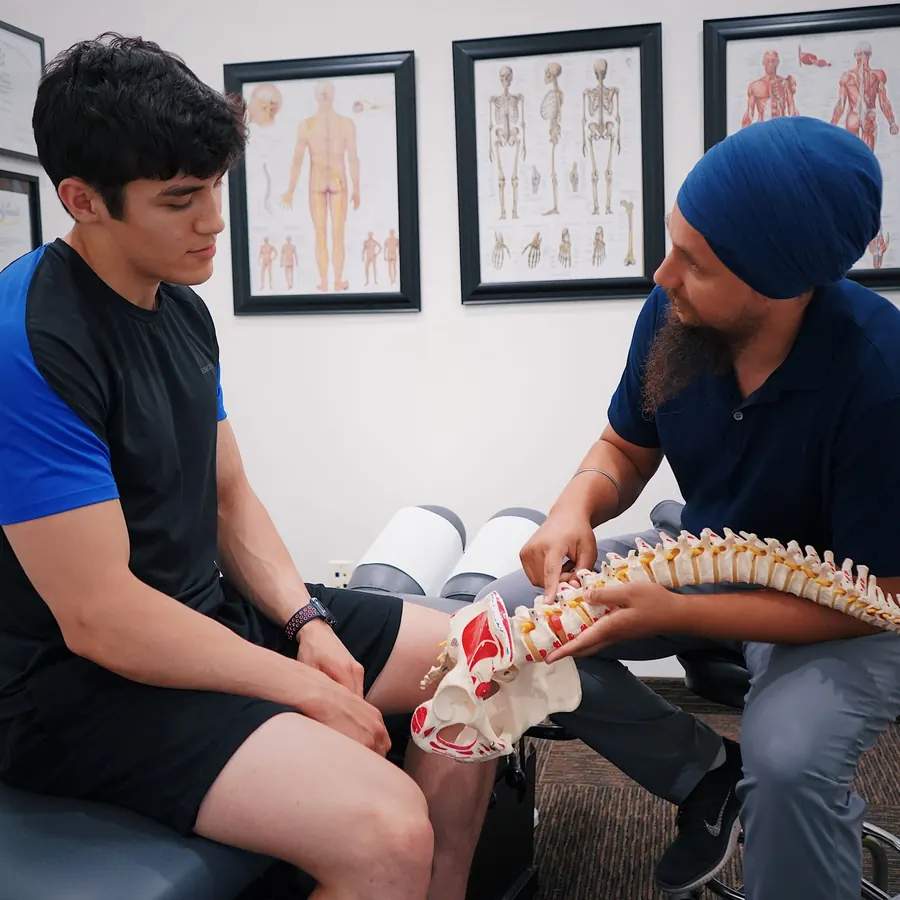
Photo: Pexels photo 19440815 by Fatih Ustaosmanoğlu, used under the Pexels License. Cropped, resized, and converted to WebP. Modified from the original.
Where you stand
How you practice shapes where your own health plan comes from:
HealthCare.gov treats a business that takes in income but has no employees as self-employed. You can buy an individual Marketplace plan and find out whether your income qualifies for a tax credit.
Independent contractors without employees can enroll through the individual Marketplace too. Your application asks for estimated net self-employment income for the year you'll be covered, not last year's.
Once your business has even one employee besides yourself, a spouse, family member, or owner, you may be able to use the SHOP Marketplace for small businesses to cover yourself and your team.
Practice income and taxes
These points follow HealthCare.gov's self-employed coverage page and the IRS Instructions for Form 7206, read October 29, 2026. Ask your tax preparer how they apply to you.
From the BLS
Chiropractor jobs in the U.S. in 2025.
Share of those jobs held by self-employed workers.
Share in offices of chiropractors, the largest employer group.
Source: U.S. Bureau of Labor Statistics, Occupational Outlook Handbook: Chiropractors (2025 figures, read October 29, 2026). U.S. figures only.

Working with Paul
Daniels Health Advisors is the independent brokerage Paul Daniels founded, licensed in 20 U.S. states. We work with chiropractic physicians who are opening a first office, buying into a group, or practicing as associates. We start with what a Marketplace plan may cost after any tax credit on your expected net income, then lay out private PPO options when income runs high, and small-group choices once you have staff. Some private plans ask health questions, and approval is not guaranteed. Some may not cover care for health problems you had before you enrolled.
Bring last year's Schedule C or K-1 if you have one, a best guess at this year's net income, and the doctors your family sees.
Your first call
Solo, associate, partner, or owner with staff.
Net practice income becomes the number your application needs.
Premiums after any tax credit, networks, and the deductible.
Recommended on Facebook
“I’ve know Paul for years and definitely trust him in the health advisor dept! Working with small business owners he has been a great partner with explain options and provide solutions!”
“Paul was very helpful in my search for business group insurance. He was able to explain my options and answer all the questions I had before signing up. Highly recommend working with him!”
Before you hire
Adding your first employee can change your options, because a business with staff may be able to use SHOP instead of the individual Marketplace. If you're leaving a clinic job that came with benefits, losing that coverage qualifies you for a special enrollment period, so you don't have to wait for open enrollment. On the patient side, Florida law says a health policy that pays for medical services must be read to include payment to a chiropractic physician for services within the scope of that license. After the call you will have:
A checklist for
Chiropractor coverage questions
Yes. HealthCare.gov says freelancers, consultants, independent contractors, and other self-employed people with no employees can enroll in the individual Marketplace. Savings depend on your estimated net income and household size.
Possibly. The self-employed health insurance deduction, figured on IRS Form 7206, can cover premiums for you, your spouse, and your dependents if you had a net profit or self-employment earnings. It isn't allowed for months you were eligible for a subsidized employer plan. Ask your tax preparer.
If your business has at least one employee besides yourself, a spouse, family member, or owner, you may be able to use the SHOP Marketplace to offer coverage to you and your staff. Our small business health insurance page in Florida explains the options.
Shop as a self-employed person. When you apply, estimate your net self-employment income for the year you'll be covered, and keep the tax credit payback rule in mind if your income swings during the year.
Losing job-based coverage qualifies you for a special enrollment period. You can apply up to 60 days before or after that coverage ends, so you can line up a Marketplace plan for when you go out on your own.
Not for every plan. A private plan (not from the Marketplace) can often be bought any time of year. Some private plans ask health questions, and approval is not guaranteed. Some may not cover care for health problems you had before you enrolled. Marketplace plans, and other plans that follow ACA rules, work differently. As of October 29, 2026, under current law, open enrollment for 2027 plans on HealthCare.gov runs from November 1, 2026, to January 15, 2027. To start coverage January 1, pick a plan by December 15. States that run their own Marketplace may set different dates, so check with your state's Marketplace. A federal appeal about these rules is pending (City of Columbus v. Kennedy, 4th Cir. No. 26-1938), with oral argument set for October 30, 2026, so confirm the dates before you enroll. Outside open enrollment, you need a special enrollment period, such as one after losing job-based coverage.
Book a 15-minute call to compare plans for your practice, or see quotes online.
Daniels Health Advisors LLC is an independent brokerage, not a carrier, HealthCare.gov, or CMS. Agent: Paul Daniels, NPN 20986580, Florida license G065122. This page explains coverage options for chiropractors in general. It is not tax advice; ask a tax professional about deductions. The BLS figures describe U.S. chiropractors as a whole, not your practice. Tax credits, plans, networks, and prices depend on your state, zip code, income, and household. We never guarantee approval, a doctor, or a price. Not medical, legal, or tax advice.